|
BALI CULTURAL PERFORMANCE
|
BARONG DANCE
This powerful performance represent an eternal fight and struggle between good and evil. Good spirit is personified by barong Keket, a mythological animal, strange, fun loving and seems like a lion. On the other side, rangda represent the evil spirit. Rangda is a wicked mythological monster, a witch and she has a big magical power. This make that the battle is too terrifying and seems like have no end. Because the Rangda is too powerful, the followers’ o Barong, bearing the keris knife comes to help him to fight the Rangda. Retreats to recuperate her strength for the next encounter.
By the end of this performance, the priest come to help the Keris dancers get their consciousness back by sprinkling holy water.
KECAK DANCE
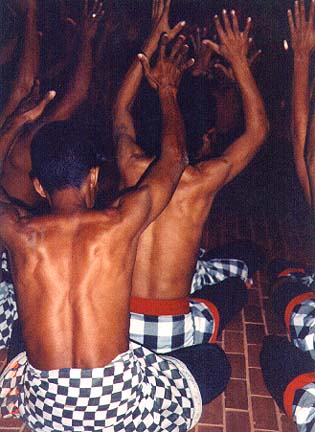
Kecak dance or monkey dance is the most unique Balinese dance and a very exciting dance to watch. This dance is not accompanied by any gamelan orchestra but by a choir of hundred of man. It is originated from an old dance: Sang Hyang Dance. In 1930’s, Walter Spies, a German painter, and Katherine Meson, an author felt that the “cak’ chorus of Sang Hyang Dance could be taken out of its ritual purpose by combination a story line and it would be a fascinating dance. By the help of Limbak a famous Balinese dancer, they added the story of Ramayana, an old Indian epic, into the dance and named Kecak Dance or Monkey Dance. The fragment of Ramayana epic tells about the efforts of King Rama to rescue his beautiful wife who was kidnapped by King Rahwana. With the help of Sugriwa, the monkey king, Anoman, the white monkey and monkey army, Rama successfully got his wife back safe and sound. Happily they return to their palace at Ayodya after the end of their exile as a new king.
SANGHYANG DANCE
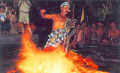
The Sanghyang dances are sacred dances, only performed in order to ensure the health and the well being of a village and the inhabitants. They are performed to drive away evil spirit from the village and to stop them from disturbing the villagers through sickness and death. Sanghyang is divine spirit and means “holiness” that enters the bodies that went into a trance. There are many Sanghyang Dance, but the most well known are Sanghyang Dedari and Sanghyang Jaran Dance. Sanghyang Dedari Dance (dedari means angel) is performed by two pre-pubescent girl dressed in legong costume. These girls gradually go into trance, and then are carried on shoulder around the theatre or village. They dance with closed eyes and the dance will last up to four hours. A trance boy performs Sanghyang Jaran Dance (jaran means horse) and he will dance on a coconut palm hobbyhorse and will behave like a horse. This dance is also called Fire Dance. It is said that the dancer is attracted by all form of fire so onlookers are not allowed to smoke. The dancer will dance around and on the burning coals, bathing in fire without getting hurt or burnt. The sprinkling holy water from holy priest will take back the dancer’ consciousness.
LEGONG DANCE
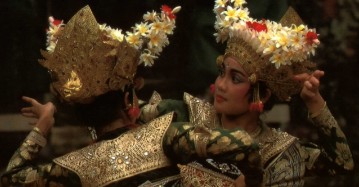
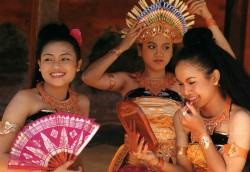
Formerly this classical Legong Kraton Dance was performed for king’s entertainment. This dance is performed by three girl dressed in gold brocades and flowered headdresses. The dance depicts the story about king of Lasem kidnapped Princess Rangkasari, the daughter of king of Daha. The princess’ brother tries to persuade king of Lasem to release the princess to avoid a war, but unfortunately the king denies to let her free. On the way to the war a giant eagle, a bad omen attacked him and killed him. There are other dances that will be also performed: Baris Warrior Dance, Tambulilingan Bumble Bee Dance etc.
General
Information l Balinese Dances l Travel
Tips l Picture Gallery
l Exchange rate l Places
of interest
|